ART VIEWS

Area music lovers are in for a treat the next two weekends, as the Reno Phil and Reno Chamber Orchestras continue their seasons.
Our musical feast begins with a concert that is in many ways quite literally for the birds. Really! Opening with Jonathan Sokol’s What Trees May Speak, employing recorded birdsong as well as evocative, melodic writing for the instruments of the orchestra, this piece shines a light on the dwindling bird population in our world while inspiring listeners to consider and engage in conservation efforts.
The concert’s title takes its name from the second piece on the program, Stravinsky’s Firebird. Written originally in 1909-10 as music for the ballet presented by Serge Diaghilev’s Ballets Russes, the Phil will be playing a suite of music for orchestra without dancers. Stravinsky extracted and arranged suites of music from the ballet at three different times over the years—in 1911, 1919, and 1945. The Phil will perform the 1919 rendition, which remains the most performed of the three suites today.
After intermission, the concert closes with one of the most beloved piano concertos in the repertoire, Tchaikovsky’s First. But the work didn’t start out as beloved. In 1874, when working on the composition, Tchaikovsky, who was not a pianist, asked “friend” Nicolai Rubinstein to come listen to him play through the work and offer some feedback. Rubenstein’s response began in cold silence and then erupted into a volcano of insult about how the piece was “vulgar”, “clumsy”, “unplayable”, and “badly written.” In a concert with a bird theme, I suppose one could say he gave Tchaikovsky’s piece the bird. The composer, figuratively, gave him back the bird by saying, “I shall not alter a single note. I shall publish the work exactly as it stands!” (*A couple years later, after some kinder feedback from a different pianist, Tchaikovsky did make some helpful tweaks to the score.)
Although written in Russia, the work received its world premiere in Boston, and it was very well received. Since then, the work has been among the most played concertos. During the heart of the Cold War, a young man from Texas, Van Cliburn, stunned the world by going to Moscow and winning the International Tchaikovsky Competition. Later that year he recorded the Tchaikovsky First Concerto and a few years later it became the first classical recording in history to go Platinum. For this weekend’s performances, Reno is fortunate to have Jon Nakamatsu as soloist. Winner of the Van Cliburn Competition in 1997 (yes, this competition was founded by the same Van Cliburn), Mr. Nakamatsu has a close relationship with Reno and the Phil and appears here regularly. Several years ago, he traveled with the leadership team from the Reno Phil to Steinway Headquarters in New York to help them select the piano that the Phil purchased. He will perform on that instrument this week. Lots of full circles here.
Mr. Nakamatsu is a remarkable artist and person. One place this is demonstrated is in his legendary 2007 “Loser’s Club” speech. Do yourself a favor and take 10 minutes to watch here:
Jon Nakamatsu's, 1997 Cliburn Competition Gold Medalist, addresses the audience during the awards ceremony prior to announcing the finalists of the fifth International Piano Competition for Outstanding Amateurs. Footage provided by Viktors Berstis
The Reno Chamber Orchestra continues its exploration of American musical perspectives with its Barber: American Voices concert. RCO music director Kelly Kuo has assembled a program that looks backwards and forwards in our country’s history. These performances open with Charles Ives’ Symphony No. 3 “The Camp Meeting.” Ives is one of the most interesting and important American composers. Completely original and modernist, his music often combines different themes and popular tunes, often at the same time. This can simultaneously cause both a jarring cacophony as well as a fascinating and rewarding new perspective. It is completely original. Composed at nearly the exact time Stravinsky was writing his Firebird, Ives’ 3rd Symphony, and penned for the smaller forces of a chamber orchestra, it melds Civil War songs, dances, and themes from Western classical music to evoke a nostalgic setting of his fond childhood memories. A miracle of Ives’ music is that, even a century later, it sounds at once ultra-modern and of a long-gone era.
Samuel Barber’s Knoxville: Summer of 1915 has become a treasured staple of the chamber orchestra repertoire, and not unlike the Ives, is a stunning and nostalgic look back. Setting a text by author James Agee, Barber skillfully and artistically walks the listener through a young child’s view of a long-gone summer night. Lauded lyric soprano Jacqueline Echols joins Maestro Kuo and the RCO for this powerful work.
From 1915 to 2025, Ms. Echols returns to the stage to sing the aria When they ask me to stand, will I? from the opera She Who Dared by the remarkably talented modern composer Jasmine Barnes. This powerful opera, commissioned by the American Lyric Theater (of which Kelly Kuo is associate artistic director) tells the story of Rosa Parks and six other women crucial to the Civil Rights Movement. Here is a video of Ms. Echols, Maestro Kuo, and ensemble performing the aria at the piece’s birth last summer.
The next piece on the program, I Have Seen the Future by Matt Browne, offers a fascinating perspective. Inspired by how past generations predict what things might be like in the future, this fascinating piece might be called Nostalgic Futurism… if such a term existed.
Douglass Moore’s Farm Journal closes the concert. A work from 1947, this final “voice” projects a purely American viewpoint but without engaging in familiar sonic clichés and familiarities that one might expect from such a work from this time and place. From the program note to the CRI recording of the work:
Douglas Moore's Farm Journal here recorded is a piece of music that could only have been written by an American, its color and idiom are intensely of this continent, though the composer resorts to none of the typical phraseologies of standard ‘Americana.’
Perhaps it’s just my last name, but this Reno Chamber Orchestra concert program, with its combination of American nostalgia, history, modernism, and futurism brings to mind the quotation by author William Faulkner: “The past is never dead. It’s not even the past.”
Fortunately, as I write this, these concerts by the Reno Phil and the Reno Chamber Orchestra are not in the past. They are February 28 and March 1, and we hope you will choose to come share this music with us.
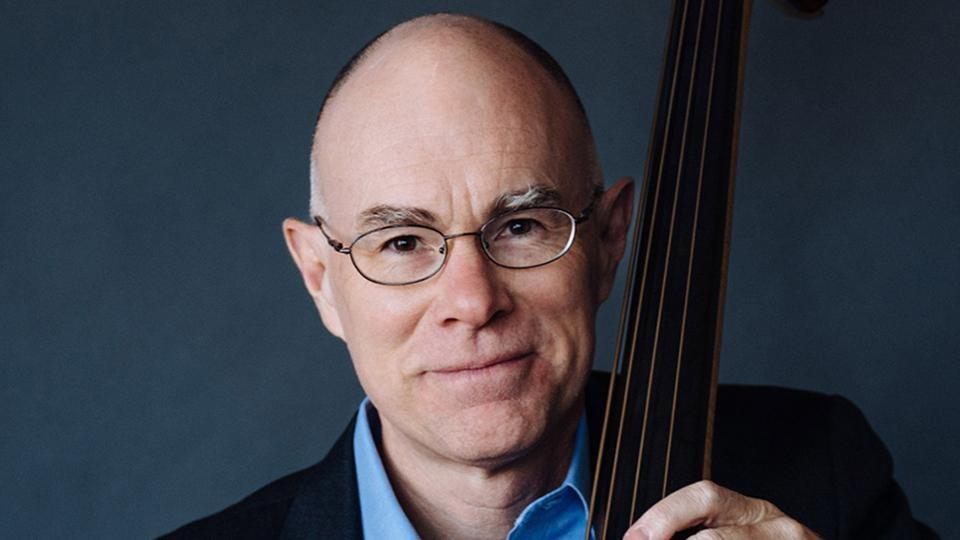
Scott Faulkner is principal bassist of the Reno Phil and the Reno Chamber Orchestra. For the League of American Orchestras, he is director of its Alumni Network and faculty director of its Essentials of Orchestra Management program.
ART VIEWS
Re: Solutions by Scott Faulkner — January 9, 2026
AI vs. AI—Ayeyeye by Scott Faulkner — November 28, 2025
30 Years of Music and Memories in Northern Nevada by Scott Faulkner — October 17, 2025
Falling into Joy by Scott Faulkner — September 5, 2025
Greetings from Lincoln Center in New York City! by Scott Faulkner — July 25, 2025
Practicing Ikigai: “A reason for being” by Scott Faulkner — June 13, 2025
A Milestone and Some Thoughts on Mission Statements by Scott Faulkner — May 2, 2025
Reno Chamber Orchestra & Reno Phil Blooming with Spring Concerts by Scott Faulkner — March 28, 2025
The Architecture of Music by Scott Faulkner — February 14, 2025
Mr. Terris: A Remembrance by Scott Faulkner — January 3, 2025
‘Tis the Season by Scott Faulkner — November 22, 2024
League of American Orchestras by Scott Faulkner — September 6, 2024
Time in Music by Scott Faulkner — August 2, 2024
Ruth Lenz by Scott Faulkner — May 24, 2024
Exploring Mahler’s Symphony No. 5 by Scott Faulkner — April 19, 2024
The Meaningful Connection Provided by Music by Scott Faulkner — March 15, 2024
Meet Reno Phil President and CEO Aaron Doty by Scott Faulkner — February 9, 2024
Looking Ahead at 2024 by Scott Faulkner — January 5, 2024
NCMF 20th by Scott Faulkner — November 24, 2023
Reno Phil Concert Preview by Scott Faulkner — October 13, 2023
Reno Phil CEO Search by Scott Faulkner — July 28, 2023
Reno Phil Concerts This Summer by Scott Faulkner — June 23, 2023
ART VIEWS
ART VIEWS
ART VIEWS
ART VIEWS
ART VIEWS