ART VIEWS

As far back as I can remember, I have been an Old Soul. In the second grade my favorite books were biographies of great Americans of the 18th century; in high school, I listened to WWII-era big band music as much or more than pop tunes of the day; and I’ve always comfortably interacted with friends two generations older than I. This trait hasn’t always helped with things like being cool or attracting girls. Fortunately, as an orchestra kid, I belong to a tribe that welcomes, or at least tolerates, nerdy not-so-currentness. I really wish I was an inquisitive early adopter. A trailblazing rebel on the vanguard. A curious and adventurous soul who sought and needed the new to fuel his way forward. But the older I get, the more I just turn into a grumpy old Luddite… or at least my humbuggery about things reveals itself with a more fluid regularity.
In addition to my gigantic collection of CDs, LPs, and 78 rpm records, library of physical books, and tendency to handwrite letters to people (or at least send text messages that use capital letters, punctuation, and complete sentences), as a card-carrying Gen Xer, my life symmetrically straddles the technological divide. I often joke that I take pen and paper, iPad, and a laptop to meetings and put my notes in all three… or none. Nothing fits.
For years, autocorrect has been an annoying help, but the exponential explosion of AI (Artificial Intelligence) that has shifted autocorrect into auto-compose feels like something different. Maybe I’m a control freak, but when I write, I want the words to be mine. I want to deploy old-school AI (Actual Intelligence). Of course, artificial intelligence is a modern miracle, and very likely, it will save or destroy our civilization—likely both. Notice the em dash I just cleverly inserted which gives a nod to AI’s favorite punctuation mark. Don’t get me wrong; if you need a list of five, affordable, pet-friendly, vegan restaurants in Paducah, AI is miraculous.
Joking aside, I wonder about the implications for human creativity and interaction. Throughout the course of our species’ existence, we have used tools and technology, and almost certainly throughout that entire history people have bemoaned the coming destruction of civilization because of it. As I consider AI and its implications, what troubles (and inspires) me most is the human part of our endeavor on this planet. We are biological creatures, not technological ones. Breath and touch are crucial defining elements of who and what we are. Generally speaking, live music requires these. My specific corner of the world, that of string bassist, is all about these aspects. The tool I use for my trade is a 290-year-old wooden box which gets its sound by stretching four strings across it and then tying a horse tail to a stick and scraping it across those strings. I usually do this in real time in the company of others with very similar, acoustic sound-making setups. We practice together for a few days and then you, fellow human, join us for a shared moment. In the concert hall, we create and partake of the same singular and unreproducible experience. And all of our lives are different for having invested a portion of them in this undertaking.
In the coming weeks, such magical shared experiences will be magnified and amplified by the power of annual tradition and ritual when the Reno Phil performs Spirit of the Season (December 12, 13, 14), Tchaikovsky’s The Nutcracker with AVA Ballet Theatre (December 19, 20, 21), and the Reno Chamber Orchestra presents the Nevada Chamber Music Festival (December 28, 29, 30, 31). If we musicians do our jobs right, audience members will leave inspired, nurtured, and we will all be better connected to our neighbors.
Of course, I wonder what the new AI will mean for critical thinking, creative expression, and human interaction. Like technological developments have always done throughout history, it will change it, not obliterate it. Brilliant writers and thinkers like Ted Gioia make compelling cases about “fake” music already taking over the algorithms of music streaming services, and vaporizing incomes of musicians who used to do things like sell lots of recordings. This sobering reality convinces me that we must lean into the human parts of music. The shared, synchronous human experience of making and partaking of music—together.
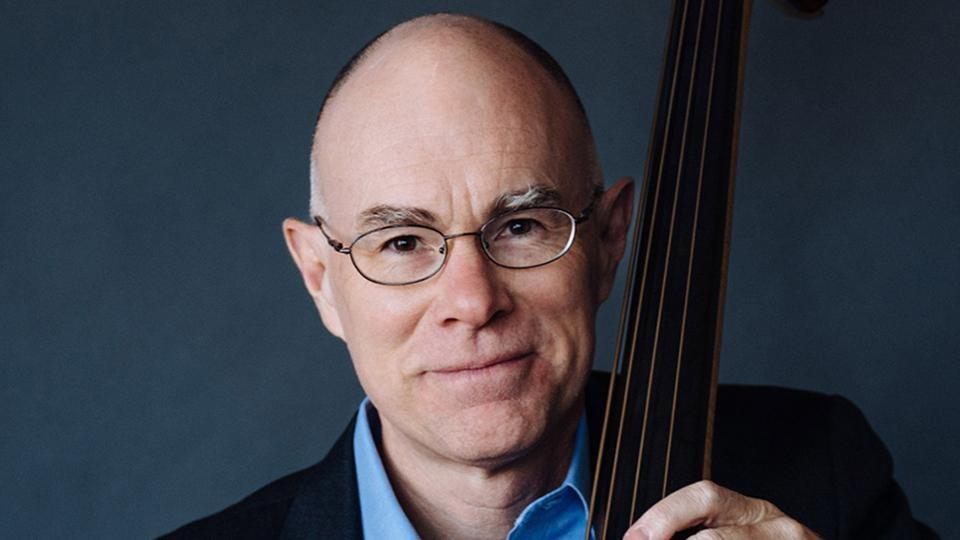
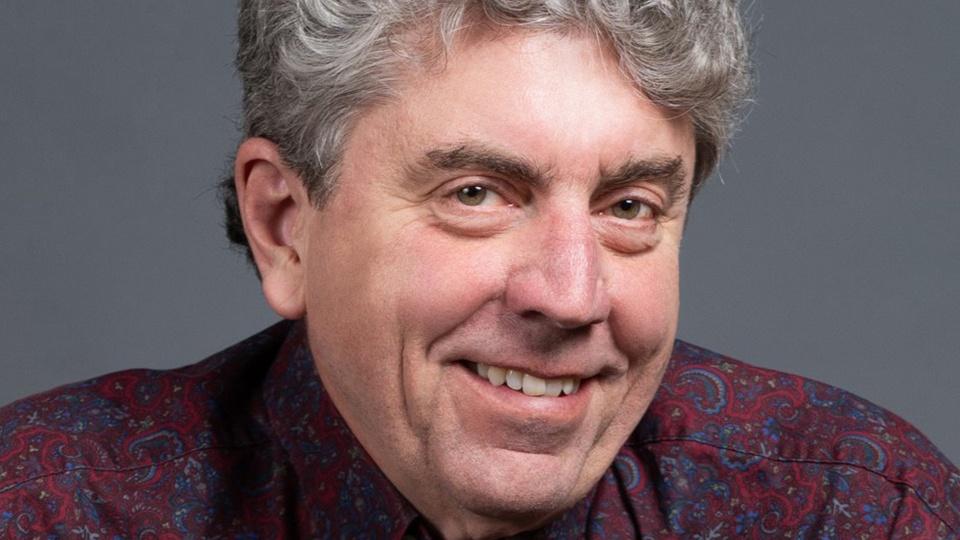
In addition to being a grumpy middle-aged guy who acts like a grumpy old guy, Scott Faulkner is principal bassist of the Reno Chamber Orchestra and Reno Phil. For the League of American Orchestras, he is faculty director of its Essentials of Orchestra Management program and director of its Alumni Network. He encourages you to go share the experience live music in your community… and also to get off his lawn!
As a holiday bonus, the writeup below was generated by ChatGPT in about fifteen seconds by entering the prompt: “Write a 400-word column about music in the style of Scott Faulkner.” You can decide for yourself if it is close to how I write. I’d point out all the things I’d change, but it would require printing it out and marking it up with my red pen.
There are days when music feels less like an art form and more like a neighbor who keeps dropping by unannounced—usually at the precise moment you’ve settled into something else. You’re slicing onions, or trying to persuade a houseplant to persevere through yet another winter, and suddenly a melody ambles through the doorway of your attention. It’s rarely the piece you expect. More often it’s something you heard weeks ago, or years, tugging at your sleeve like a memory that resents its own patience.
We talk about music as if it were a series of choices—what we put on, what we turn off, what we claim to love. But if you pay attention, you discover the relationship is far less obedient. Music chooses us just as often. I’m convinced that’s why a fragment of an old string quartet can drift into consciousness exactly when you’re feeling the subtle pinch of Sunday evening, or why a half-forgotten jazz progression returns during the quiet crisis of commuting. The soundtrack arrives before the scene is fully written.
The other day I found myself humming a theme I didn’t recognize. This is always disorienting: the mind playing host to a guest it can’t quite name. I hummed it again, slower, the way one retraces steps after losing a glove. Still nothing. But as I walked, I realized I wasn’t searching for the composer—I was searching for the moment. Music, after all, is not just sound; it’s the architecture around our days. That mysterious little theme had clearly been the scaffolding of some hour I’d lived, even if the details refused to file themselves properly.
There’s a quiet comfort in that. We like to imagine our listening lives as carefully curated: playlists crafted, albums shelved alphabetically or autobiographically. Yet the truth is far more human. We are stitched together by the accidental encounters—the melody overheard through a café window, the chord change that feels like a weather report for your own interior climate.
So I’ve stopped trying to chase down that stray theme. Instead, I let it wander alongside me, a companion with no need for introduction. Music, in its stubborn way, reminds us that not everything meaningful must be named. Sometimes it is enough to listen, to recognize the shape of a feeling, and to keep walking.
Scott Faulkner is principal bassist of the Reno Phil and Reno Chamber Orchestra. For the League of American Orchestras he is director of its Alumni Network as well as faculty director of its Essentials of Orchestra Management program.
ART VIEWS
30 Years of Music and Memories in Northern Nevada by Scott Faulkner — October 17, 2025
Falling into Joy by Scott Faulkner — September 5, 2025
Greetings from Lincoln Center in New York City! by Scott Faulkner — July 25, 2025
Practicing Ikigai: “A reason for being” by Scott Faulkner — June 13, 2025
A Milestone and Some Thoughts on Mission Statements by Scott Faulkner — May 2, 2025
Reno Chamber Orchestra & Reno Phil Blooming with Spring Concerts by Scott Faulkner — March 28, 2025
The Architecture of Music by Scott Faulkner — February 14, 2025
Mr. Terris: A Remembrance by Scott Faulkner — January 3, 2025
‘Tis the Season by Scott Faulkner — November 22, 2024
League of American Orchestras by Scott Faulkner — September 6, 2024
Time in Music by Scott Faulkner — August 2, 2024
Ruth Lenz by Scott Faulkner — May 24, 2024
Exploring Mahler’s Symphony No. 5 by Scott Faulkner — April 19, 2024
The Meaningful Connection Provided by Music by Scott Faulkner — March 15, 2024
Meet Reno Phil President and CEO Aaron Doty by Scott Faulkner — February 9, 2024
Looking Ahead at 2024 by Scott Faulkner — January 5, 2024
NCMF 20th by Scott Faulkner — November 24, 2023
Reno Phil Concert Preview by Scott Faulkner — October 13, 2023
Reno Phil CEO Search by Scott Faulkner — July 28, 2023
Reno Phil Concerts This Summer by Scott Faulkner — June 23, 2023
Songs about Spring by Scott Faulkner — March 10, 2023
Bowing by Scott Faulkner — February 3, 2023
Nevada Chamber Music Festival's Holiday Gift by Scott Faulkner — December 23, 2022
Thankful for Christmas Music by Scott Faulkner — November 25, 2022
Incredible Alumni from Essentials of Orchestra Management Seminar by Scott Faulkner — October 21, 2022
Falling for Orchestra: A Season of Events by Scott Faulkner — September 23, 2022
Thoughts on Leadership by Scott Faulkner — August 26, 2022
Greetings from New York City! by Scott Faulkner — July 29, 2022
H. Elizabeth Lenz by Scott Faulkner — July 1, 2022
A Thousand Blended Notes by Scott Faulkner — June 3, 2022
Music Not to be Missed in May by Scott Faulkner — May 6, 2022
Classical Music Galore by Scott Faulkner — April 8, 2022
Chord Changes by Scott Faulkner — April 1, 2022
ART VIEWS
ART VIEWS
ART VIEWS
ART VIEWS
ART VIEWS